



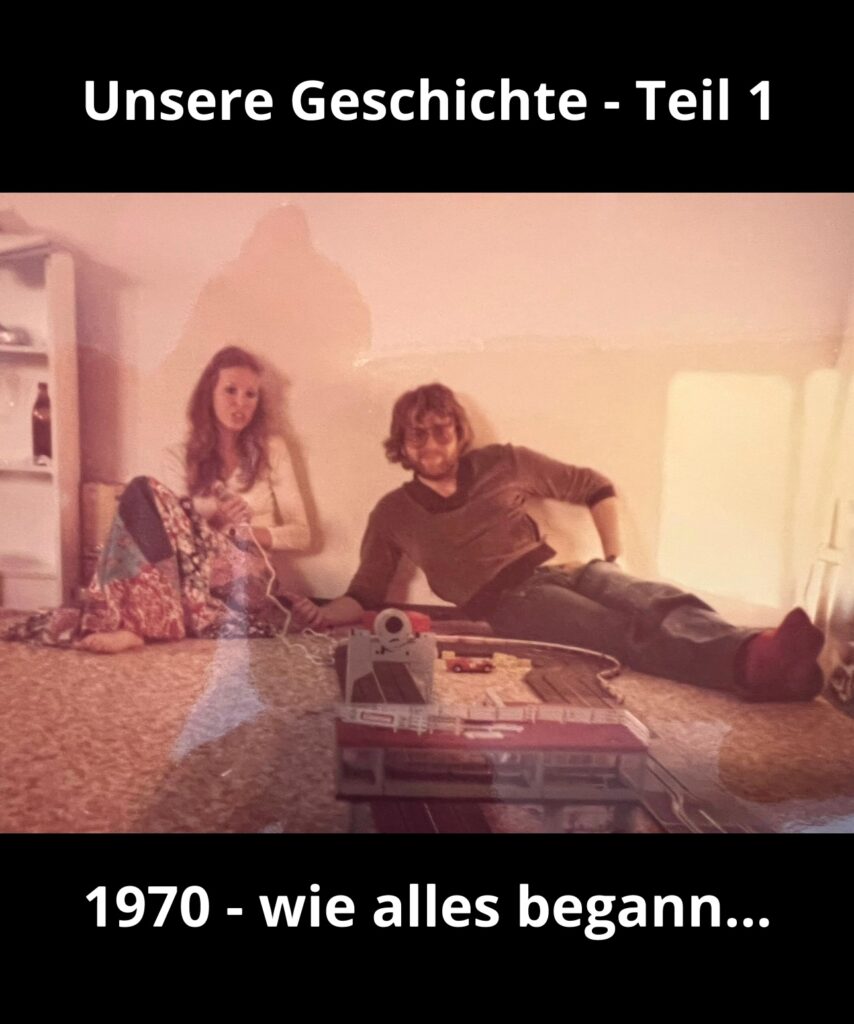
How it all began in 1970:
After hotel management school in France and the obligatory internships in Porto Vecchio/Corsica and in London, I was called up by the German Armed Forces and was slowed down for a while.
Shortly afterwards, I met four young hippies from Rennes in Brittany in Erlangen, who actually wanted to drive to India in their old VW van, but were stranded in Erlangen, Rennes' twin city, with major engine damage.
At the same time, a sign in the window of a narrow old house in Erlangen's Hauptstraße 59 kept me going: "For rent!"
I managed to conclude a rental agreement for the long hallway on the ground floor for only DM 350 per month with the unilateral option to terminate the contract at any time from one day to the next during the first six months. The business idea was quickly found - thanks to my French friends:
"Crêperie Rennaise"
I wanted to make the partnership between the two cities visible with initially four bar tables on an area of just 4 x 4 m, with specialties from Brittany: gallettes (made from buckwheat flour) with savory fillings, various sweet crêpes, cidre brut and eau de vie de cidre. There wasn't much else.
The Erlanger Tagblatt newspaper reported on it in detail, as the Lord Mayor also stopped by for the opening. A little later, a French TV team even visited us and things went better from day to day, so that I was able to quickly expand the mini store to 30 seats at the back with a lot of my own work on the building and little money.
It was at this point that I met Renate, my future wife, who immediately recognized that someone urgently needed help and we worked together from then until today. I couldn't have done it without her!
Old wagon wheels, table frames from the village blacksmith and glass tops made up our tables.
The range of dishes was expanded to include onion soups au gratin, mussel soups, vineyard snails and frogs' legs in garlic butter, as well as inexpensive Languedoc wines in liter bottles in all three colors.
However, bouché cider (sealed with real cork) remained the most important drink. The first delivery of cider from Domagné contained only 1000 bottles, from the second delivery onwards we ordered 20 tons at a time. We were able to take our time with payment at the beginning; the owner Loic Raison quickly became a good friend and continued to visit us decades later.
But now the music was just as important as the food and drink!
Our guests listened to Leo Ferré, Georges Brassens, Jacques Brel, Edith Piaf, Barbara and Juliette Greco and we quickly became the cult pub for all Francophiles and existentialists.
The Nuremberg chic crowd quickly followed what could be seen on the roadside outside the door every evening: MGs, Triumphs, Austin-Healeys, Jaguar E-Types and, in summer, Norton motorcycles. There were no parking problems back then.
Almost all the guests smoked back then - in our case, of course, mainly Gauloises and Gitanes. The air was usually stiflingly thick; there was only a small fan above the entrance door.
Artists came to us after their performances: Georges Moustaki, André Heller, Elke Sommer and even Johannes Hester.
And now we have employed our first full-time chef!
Back then, there was no excessive bureaucracy: I forgot to register my first employee properly; I only noticed when he went to the doctor and found out that he wasn't insured. No problem! The friendly lady at the AOK just laughed and registered him retroactively for me.
We were always open all night for the Erlangen Castle Garden Festival and even after 4.00 a.m. ball visitors were still coming by for an onion soup and a last nightcap.
Lockdown period or not.
... the story continues.... ❤️
#kobjoll #Schindlerhof #history